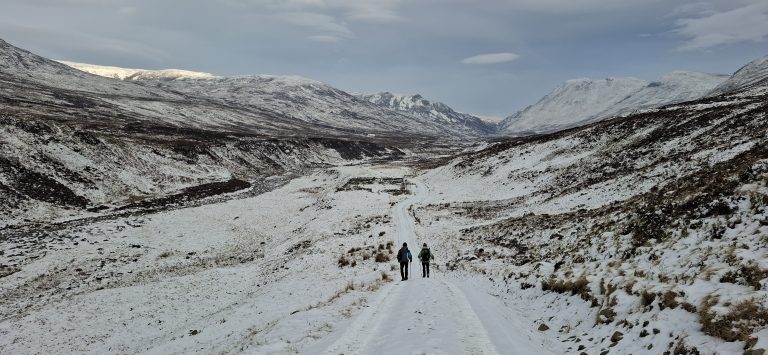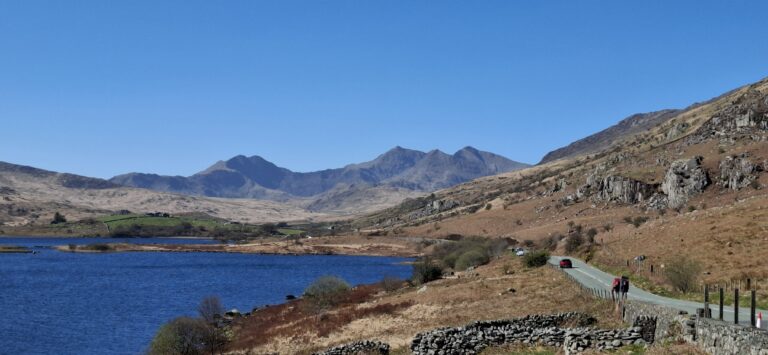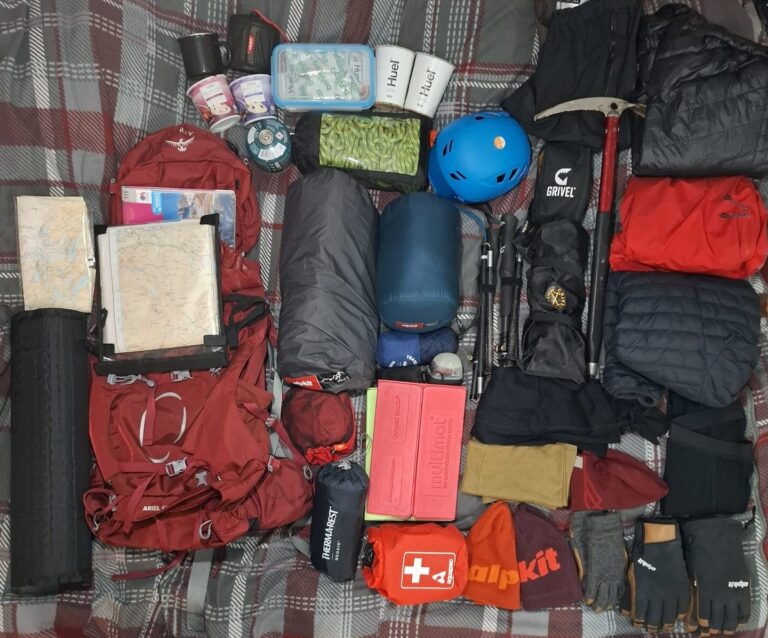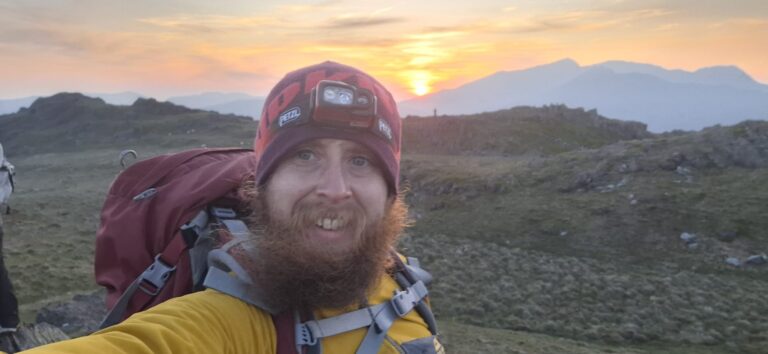
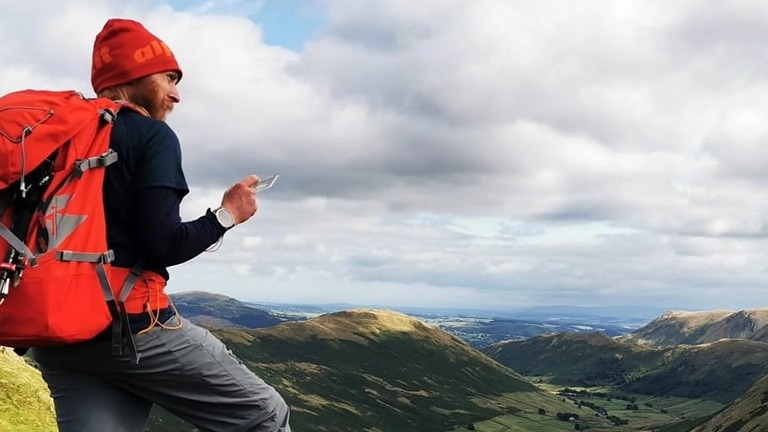
I’ve just arrived back from 5 glorious days in Eryri, having successfully passed my Summer Mountain Leader Assessment! Perfectly timed to unveil P600 Mountaineering to the world!
Now that I’m a qualified Summer Mountain Leader, I offer guided walks, navigation training, and bespoke mountain experiences across the UK.
Learn more about my services here
I’m aiming to capture thoughts and experiences of my journey through the Mountain Leader qualification and hopefully offer a useful insight for others thinking of pursuing training and development in mountain craft. A big part of training as an ML for me, is being able to Inspire and Empower others to Explore the wild places of the UK. This isn’t just about formal training like the Mountain Leader Scheme, but also through offering an informal insight into various aspects of the Mountain Environment, to give them confidence to get out and appreciate the holistic benefits the outdoors offer.
Why did I Start my Mountain Leader Journey?
Being totally honest, my journey towards ML started life as an idea that the training course would be a fun week on “Holiday” with someone who knows what they’re doing, and I might learn something along to way.
As I started to explore the idea further, I quickly realised there is more to becoming an ML than walking in the mountains and being handy with a map and compass. This didn’t put me off though; It only served to motivate me more and that seed of an idea soon blossomed into P600 Mountaineering!
Prior to starting my ML training, I was lucky enough to get funding from my employer (I’m actually a qualified accountant between 9 and 5 and pull on my Gore-Tex and boots during evenings & weekends!) to complete the National Navigation Award Scheme (NNAS) Bronze and Silver, which gave me a solid foundation in navigating with map and compass.
I also joined my local Ramblers group, first to get out and explore with others, before eventually building the confidence to lead my first walk. As my sights shifted towards Mountain Leader, I started looking at BMC Mountaineering Clubs to continue stretching my experience and exposure to bigger and tougher challenges. It was after a few conversations with friends from The Ramblers and Shrewsbury Mountaineering Club that Phill George’s name cropped up multiple times as a well-regarded ML Training Provider in Wales, so I took the leap and booked my Training course for March 2024.
What does Mountain Leader Training Involve?
This is when the hard work really began, as I started to pull together my logbook and ensure I had 20 Quality Mountain Days that met the definition of a QMD.
Arriving on assessment, I had around 27 QMD’s in my logbook. These went back around 8 years, so you can absolutely add historic logs if they met the definition of a QMD. I found it useful to filter my Strava activities by duration and elevation gain to jog my memory about the older days. I included around 6 historic walks, and the remainder took place within 12 months prior to my training course. I think this was a nice balance; It showed that I had been active in the mountains for several years, while also showing that I was current and serious about being in the hills regularly. The actual course is delivered over 6 days and covers much of the syllabus, with certain days focused on one or more areas.
Day 1 – A Mountain Journey on Moel Eilio
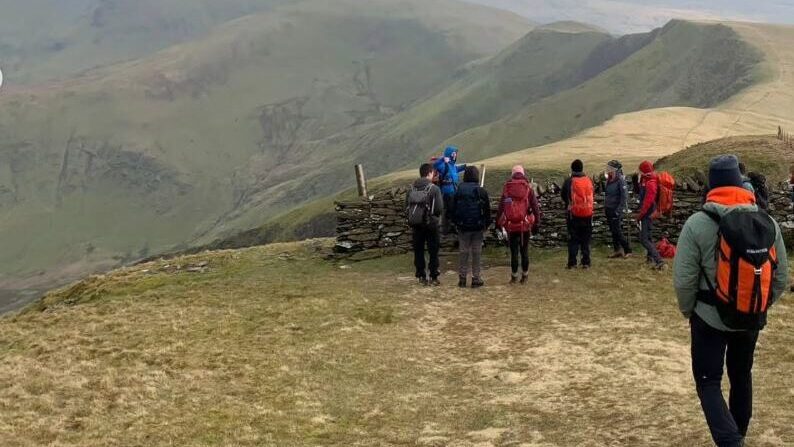
We started the day getting to know each other, before moving onto an overview of the ML scheme. This was designed to settle everyone’s nerves and ensure we all had the same basic understanding of the week ahead.
We then moved onto planning our day on the hill, and like any good mountain walk in Wales, the weather was a key consideration! We had a clear and calm day ahead, with 20mph south-westerly winds; What more could we ask for?
Access and conservation were another discussion point, mainly focussing on checking our understand of where we were allowed to go, and how we might minimise our impact on the natural landscape.
Then we set out from Dol Peris, and completed a circular route, traversing from Foel Goch to Moel Eilio (the second group did this in reverse, and we briefly met by a stile halfway through the day.) The main focus was on navigation and getting into the swing of going for a mountain journey.
Day 2 – Scrambling on Moel Siabod
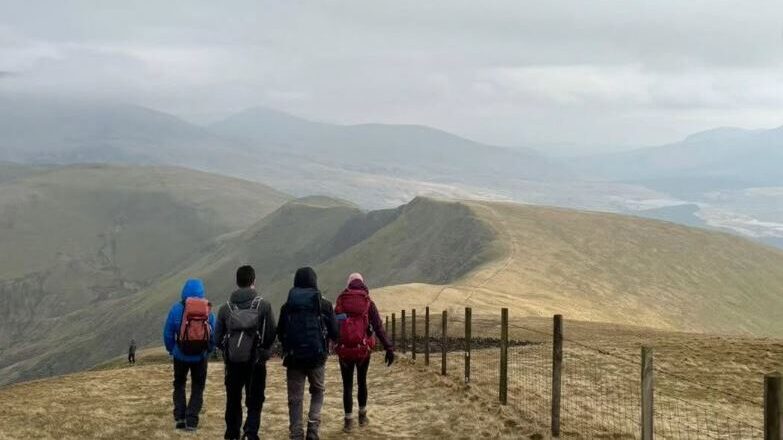
Again, we started the day by discussing the weather, with the forecast looking a lot less fun today. We were in for a very wet day (more on this shortly) with South Westerly winds gusting up to 40mph on the tops, combined with poor visibility above 600 metres.
Access & Conservation was another recurring discussion, which we touched on again. It’s important to keep this in mind when planning an adventure in the mountains.
We also started to take the conversation beyond our personal abilities to operate in the mountains and started to look at group management; This being a leadership award after all.
After the short indoor session, we headed out onto the hill again, this time tackling the great introductory grade 1 scramble on Moel Siabod via the Daear Ddu ridge.
This gave us the opportunity to start practicing some aspects of security on steep ground including confidence roping and rope work scenarios. Aside from the safety aspect, we also started to assume the leadership role, coaching our colleagues through the steeper sections.
On the summit, visibility was poor. This was our first taste of relying solely on the map and compass to get our bearings and head off in the right direction.
By happy coincidence, Moel Siabod is in the bottom corner of the 1:25k map, so we also had to use the 1:50k map on our descent; It’s almost like the instructors planned for us to walk off the edge and see if we’d cope!
Day two was a massive learning experience for me. The weather was grim, my waterproofs weren’t up to the job, and I was cold, wet and tired very early in the day. This was probably the lowest point of the week for me, and I certainly started to regret my life choices. When I called home that evening, they genuinely expected me to turn up having quit, but luckily, I persevered, and the week did get better.
If you’re thinking about doing your ML, definitely come into it with your eye’s open. You will get challenged. You will have days when you regret it. But you’ll also come out the other side stronger for the learning experience; Making you a better mountaineer personally and better equipped to help others have a positive experience on the hill.
Day 3 – Rope Work and Security on Steep Ground
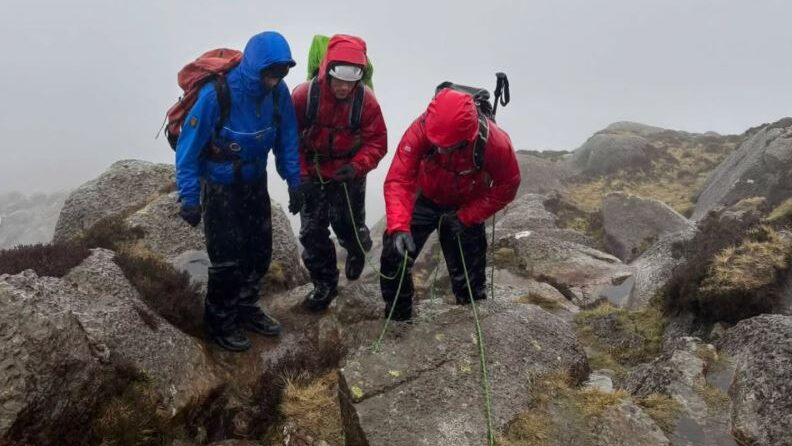
The recurring theme each day was to start with a discussion about the weather, access & conservation. We were in for another very wet day, with forecast winds from the Southwest hitting over 50mph on summits. This might not sound like much, but it’s really not fun when you’re in the mountains! A big mistake that people make with the wind is comparing it to things like the speed of their car. This leads to underestimating wind speeds on paper (50mph doesn’t sound like much) while you’ll actually overestimate it on the ground (anything over 25mph and you’ll start to feel it and likely make wild estimations above 40mph!)
Here is a useful graphic from the Mountain Weather Information Service (MWIS) – Their forecasts are useful as they focus on the mountainous regions and also explain what the forecast actually means for you.
Therefore, we had to find a sheltered venue for the day’s activities. We planned to spend the day on Clogwyn Mawr, behind Bens bunkhouse, focusing on all aspects of security on steep ground, with and without the rope.
We also covered mountain hazards and improvised rescue techniques.
This was my first real introduction to rope work, with the rest of my group competent climbers. Although the Mountain Leader award doesn’t cover the planned use of the rope, it’s an important skill to have in the back pocket in case you or the group find yourself in an unexpected situation.
I learnt a lot on this day, partly because it was one of the areas I knew least about, and also because the rest of the group needed less input while being keen to show off what they knew; It wasn’t quite a 6:1 instructor:trainee ratio, but I certainly get my monies worth out of everyone else learning knots, belay and abseil techniques.
Given I was able to benefit from a lot of intense input and everyone else was at a reasonable level, we were soon able to move onto techniques that exceeded the remit of ML, including Alpine / Chest Coils, which are a really useful skill to deploy in steep ground allowing you to keep the rope neatly managed and minimising distractions while you focus on keeping the group moving safely and efficiently.
Day 4 – Scrambling Seniors Gully in Cwm Idwal
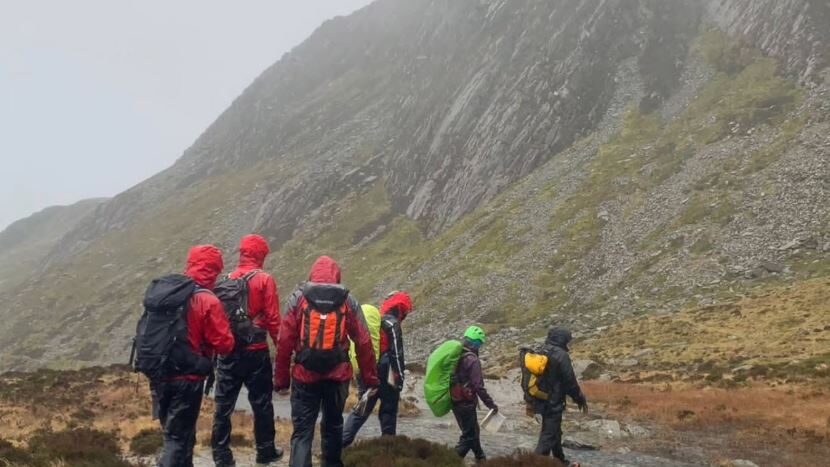
We continued to build on the previous day’s topics, with weather, access & conservation, and navigation & leadership all being a given by this point. We were in for another very wet and windy day with 40 mph Southerlies requiring us to find a sheltered route for the day.
We decided to head to Cwm Idwal, and head up the Seniors Gully, an excellent summer grade 1 scramble from Llyn Idwal up to the summit of Glyder Fawr. Although this gully offered protection from the worst of the wind and driving rain, it was also funnelling all the rain off the top of the Glyderau down towards the lake below and felt more like a ghyll scramble!
I’d learnt my lesson from day 2 and wore my waterproofs from the off; This didn’t help much though, as I was soon soaked to the skin and my hearing aid packed up. Luckily, the group was understanding and made sure I heard their instructions over the wind and gushing waterfall we were ascending.
Again, we used this to practice security on steep ground, including route finding, while adding in concepts like spotting & group management in steep consequential ground .
We also took some time to discuss the upcoming expedition, making sure everyone had the right equipment and knew what to expect over the next few days.
Day 5 – Expedition, Wild Camp and Night Navigation
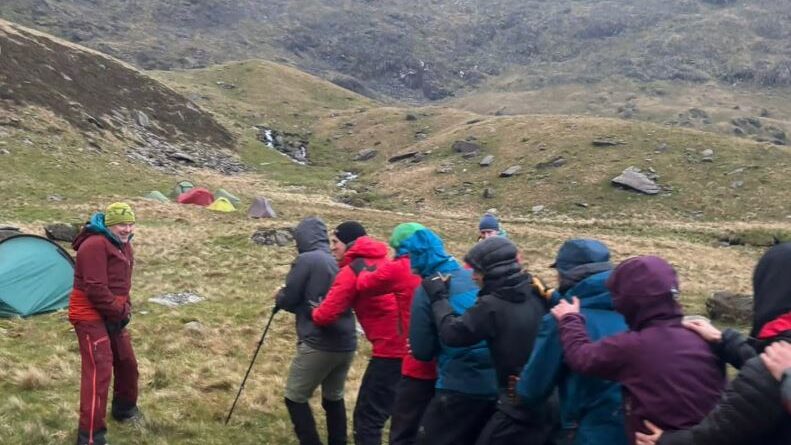
The weather discussion was even more important on the morning of the expedition, as we had to think 48 hours ahead and be prepared to deal with everything that the Welsh weather might decide to throw at us. Luckily, the worst of the weeks weather was behind us, with overcast conditions and low winds prevailing for the expedition.
It continued to dry up throughout the day, making conditions for the night navigation slightly less arduous.
The theme for the expedition was much of the same, with access & conservation considerations throughout, demonstrating navigation & leadership skills as we took turns to lead legs.
Our expedition was on the lower slopes of Yr Wyddfa / Snowdon, starting in Bethania and heading part way up the Watkin path. As we journeyed towards our overnight destination, we travelled through Bwlch Cwm Llan, Allt Maenderyn and Cwm Tregalan, discussing the industrial heritage and more recent impacts of tourists on the natural environment.
Once we set up camp, we took some time as a group to discuss camp craft, including our choice of tents, our water purification techniques and the all important 3-P’s (Peeing, Pooing and Periods) conversation; Having an open discussion about bodily functions and sanitation in the context of a camp is really important, but it’s something some people who aren’t used to being in the mountains might need even when walking for the day. It can feel awkward to start with, but broaching the topic openly will certainly make others feel more at ease, even if it’s later in the day and they pull you to one side for a private chat.
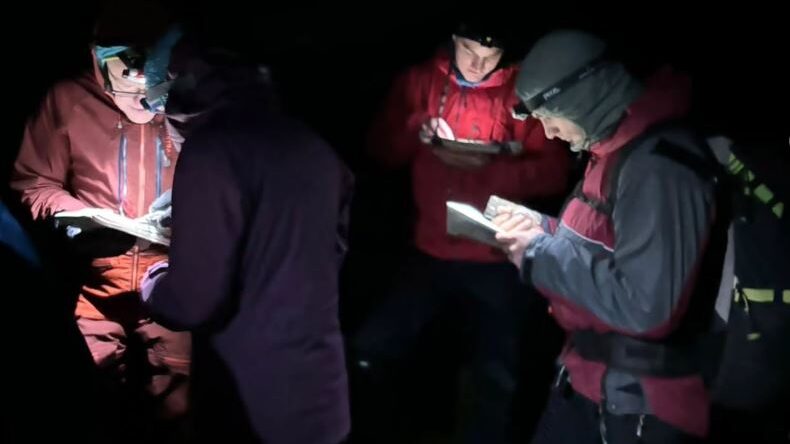
The night navigation, designed to develop our route-finding abilities in poor visibility, be that due to sunlight or weather, started just after sundown. It felt quite strange to be getting back out of our tents in the dark, facing a few more hours or walking around. It felt like we were out forever and had covered miles, but the reality was we covered around two and a half miles in three hours, but I was glad to be back in my bed after a long day with a heavy pack.
Day 6 – Expedition and Debrief
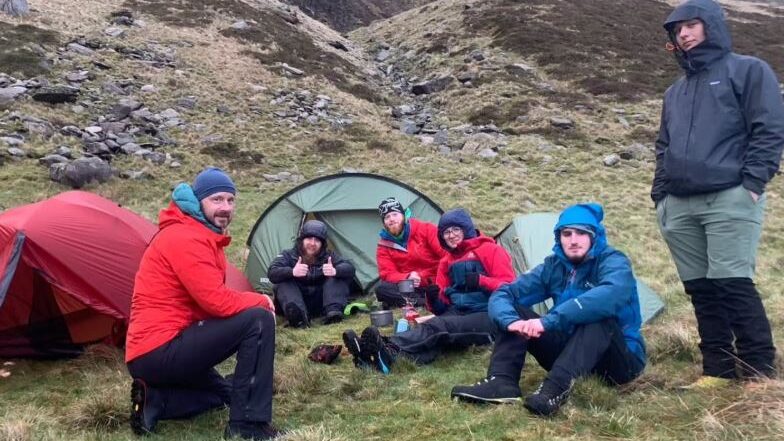
The expedition continued on the final day of the course, with us packed and on the move by 8:30am. It is critical to practice the “leave no trace” philosophy, including arriving late and leaving early to minimise the impact of wild camping on the environment and other users of the hill.
There’s been a lot of discussion about wild camping recently, with many people discovering how empowering it is to be able to get out into wild places and experience nature around the clock. However, it remains illegal in much of England and Wales, so this must be done responsibly and respectfully.
Navigation & leadership, including solely using the 1:50k map was the theme of the day as we made our way back off the mountain.
We also covered river crossings & improvised rescue techniques; These are things that you never want to do in real life and should explore every avenue possible before considering getting into water. One of our instructors was an active member of the Ogwen Valley Mountain Rescue Team, so getting his insight on this was really enlightening. After we returned from expedition, we headed to Caffi Gwynant for the group debrief and individual feedback. It was also a great opportunity to have some proper food and drink after spending 2 days on the hill eating dehydrated meals.
What was my feedback?
Overall, it was an enjoyable week. I came away having learnt a lot and a better idea of just how much more I had to learn. The feedback I was given gave me a clear idea of where I needed to focus to get my skills and experience up to the level I needed, to be able to operate as a competent Mountain Leader.
Ultimately, a lot of my earlier experience had been leading groups around the Shropshire Hills and the easier mountains of North and South Wales. The first piece of feedback to address this, was to head to Scotland and bag some Munros. This was great feedback and was certainly something I was happy to embrace; This felt like an excuse to go and do some fabulous walking, rather than being a chore.
The other piece of feedback was to walk in poor weather; Clearly, I found the rain and wind challenging throughout the week. Partly this was down to inexperience, after all, who opens their curtains in the morning and thinks let’s climb a mountain when its pouring with rain? Turns out, that was exactly what I needed to start doing going forward.
Part of operating in poor weather is down to kit choice. If you don’t routinely walk in harsh weather, you don’t appreciate the need for kit that can stand up to the elements. Now that I knew how tough it can be when you’re wet and cold for 6 days, I knew that I needed to get some kit that could match my aspirations.
Top tips for Mountain Leader Training
I’ve got a few friends who have embarked on their ML journey after me, and this is the advice I’ve shared with them:
- Remember it’s a training course, you’re there to learn and not be assessed! See it as an opportunity to find out what you don’t know, fill those knowledge gaps, and come away with a better understanding of what it means to be an ML.
- Make sure your kit is up to the job. This means layers that will keep you warm, waterproofs that will keep you dry, boots that will be comfortable and camping equipment that is light enough to carry while being robust enough to survive in the mountains. All of these are plural. Take multiple sets of layers, multiple sets of waterproofs and multiple pairs of boots; That way, you can start to tailor your outfit to the demands of the day, and you stand a chance of drying one set out while you’re wearing a set!
What happens after your Mountain Leader Training week?
During your debrief, you’ll be given some feedback on how you performed throughout the training week. This is what you’ll want to focus on during your consolidation phase. Don’t just focus on this though. Take the time to get out into the mountains as much as possible, really honing your craft. It can be useful to keep reading the Mountain Leader handbook to remind yourself of all the skills and techniques required. This will ensure you’re able to focus on the entire syllabus, but more importantly, grow into a well-rounded mountaineer.
I hope you’ve found part one of my journey to becoming a Mountain Leader insightful. I’ll discuss the consolidation phase along with my assessment in part two.
I’m always happy to discuss any questions you might have about the process, or join you on the hill for a QMD, if you’d benefit from an external perspective or just want some company. Having just been through the process, it’s all quite fresh in my mind, however, I’m obviously not an approved trainer or assessor.
You can reach me via:
Email: P600Mountaineering@outlook.com
Instagram: @P600Mountaineering
Or, leave a comment below
Good luck on your Mountain Leader journey and I look forward to seeing you in the hills soon!