First published in The Professional Mountaineer magazine, Issue 52 // Winter 2025
INTRODUCTION: THE REALITY OF FREELANCE FINANCE
Picture this: You have just returned from a successful expedition, the kind that reminds you why you chose this career. But as you unpack your gear, a letter from HMRC lands on your doormat – your tax return is due.
For many freelance professionals, the thrill of the outdoors is often tempered by the complexities of self-employment and tax. As a business owner, you are responsible for calculating and paying your own tax; it is not deducted at source, and the responsibility lies squarely with you.
This guide aims to demystify the process and help you stay on top of your finances.
Disclaimer: This article is for general guidance only. Always consult a qualified accountant or HMRC for advice tailored to your situation. Any rates or thresholds quoted are correct at the time of editing and relate to the financial year 2025/26.
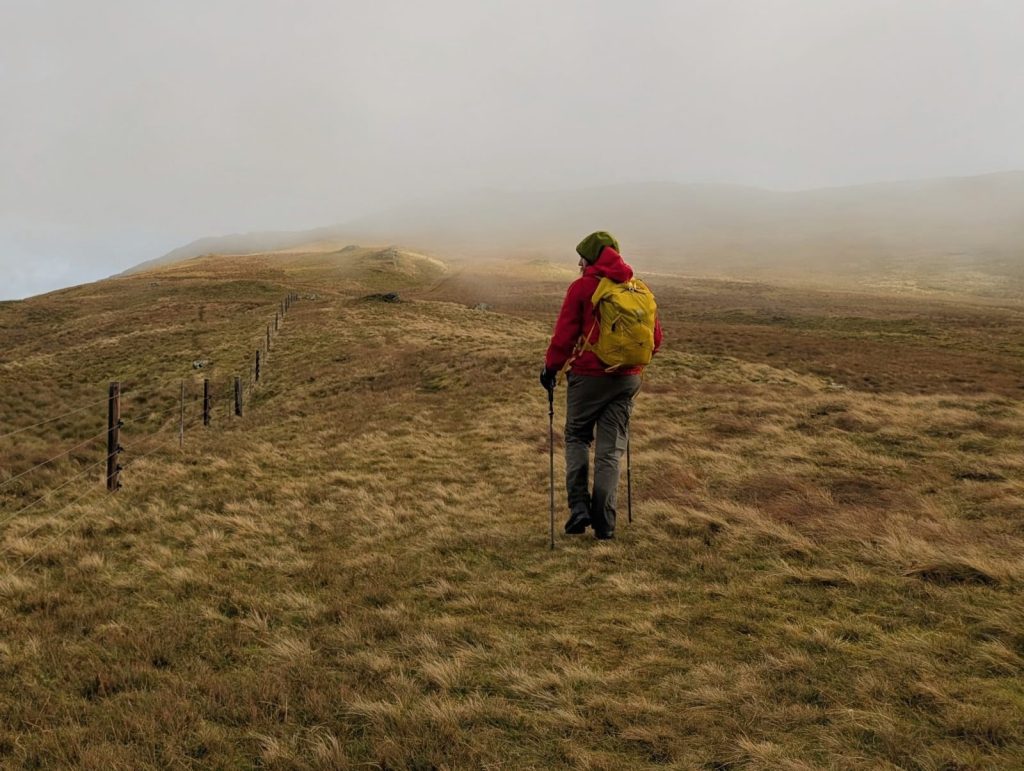
Mountain Leader candidate practice on Cadair Idris: up and over once to tackle Tapia Llwydion, then slogging up for a second time to descend the Foxes Path. Excellent navigation and steep ground training!
SETTING UP AND REGISTRATION
Most freelance outdoor instructors operate as sole traders. This means you run your own business as an individual and keep all profits after tax. It is simple and flexible, but you are personally liable for any business debts.
Alternatively, some professionals choose to set up a Limited company, which can offer tax advantages and limited liability, but comes with more administrative responsibilities and costs. If your turnover exceeds £1,000 in a tax year (6 April to 5 April), you must register for Self-Assessment with HMRC. This involves applying for a Unique Taxpayer Reference (UTR) number and must be done by 5 October following the end of the tax year in which you started trading.
UNDERSTANDING YOUR LIABILITIES
You pay tax on your profit – not your total income. Profit is your income, also known as revenue, minus allowable business expenses.
Personal Allowance
In the UK, the first £12,570 of personal income is tax-free Personal Allowance. This covers most earned income made by individuals, including from employment and self-employment. Anything above this, is taxed at various rates:
Income Tax band
Taxable income
Tax rate
Personal Allowance
Up to £12,570
0%
Basic rate
£12,571 to £50,270
20%
Higher rate
£50,270 to £150,000
40%
Additional rate
£150,000
45%
If you live in Scotland, be aware that tax rates and bands differ slightly.
National Insurance
You will also pay National Insurance Contributions (NICs):
Class 1 NICs:
Paid by Employee’s based on earnings:
between £242 to £967 a week (£1,048 to £4,189 a month) at 8%
over £967 a week (£4,189 a month) at 2% Also paid by Employers on income exceeding £417 a month at 15%
Class 2 NICs:
Paid by self-employed individuals and is a flat weekly rate of £3.50 if your profits exceed a threshold of £6,825.
Class 3 NICs:
These are voluntary contributions to maintain entitlement to certain state benefits such as State Pension. This is a weekly flat fee of £17.75.
Class 4 NICs:
Paid by Self-Employed individuals and is a percentage of your profits:
between £9,569 – £50,270 at 9%
exceeding £50,270 at 2%
Limited company
If you operate as a Limited company, you will also be liable for:
Corporation Tax
This is the tax payable by limited companies on all profits:
If your company makes less than £50,000 profit, you will pay the small profits rate of 19%.
If your company makes more than £250,000 profit, you will pay the main rate of 25%.
For profits between £50,000 and £250,000, you may be eligible for marginal relief, providing a gradual taper up from the small profits rate to the main rate.
PAYE
Tax payable on income you take out of the business as a salary. This reduces the businesses taxable profits and increases your taxable income for the year. See “Personal Allowance” and “Class 1 NICs”.
Dividend Tax
tax payable on income you take out of the business as a dividend. This is paid out of the businesses post tax reserves. The rate of tax you pay on dividends depends on how much of your Personal Allowance you have already used:
Dividend tax band
Taxable income
Tax rate
Dividend allowance
£500
0%
Unused Personal Allowance
Up to £12,570
0%
Unused basic rate
£12,571 to £50,270
8.75%
Unused higher rate
£50,270 to £150,000
33.75%
Additional rate
£150,000
39.35%
VAT
If your turnover exceeds the £90,000 threshold, you will need to register for VAT, charge this on your sales, and pass this onto HMRC as part of your quarterly VAT return. This applies to all businesses whatever legal structure they use.
Tax might seem like a mystery to the uninitiated, but just like navigating through the mists of the moelwyns, some simple skills can keep you on the right course!
MINIMISING TAX LEGALLY: THE POWER OF ALLOWABLE EXPENSES
You can reduce your tax bill by claiming allowable expenses— costs incurred wholly and exclusively for your business. Examples relevant to outdoor professionals include:
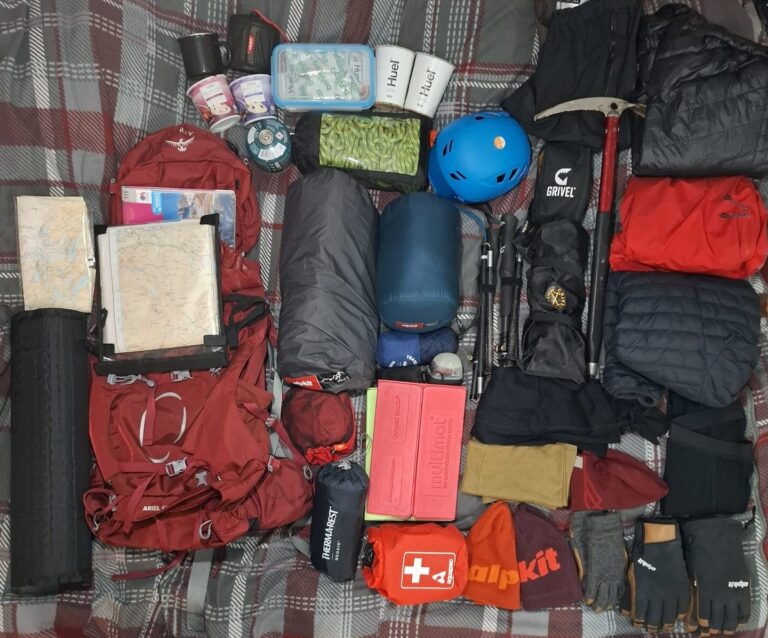
Equipment/gear: Ropes, harnesses, personal protective clothing.
Travel and vehicles: You can also use HMRC’s simplified mileage rates for using your own vehicle.
Professional costs: Membership fees, CPD courses.
Admin/office costs: Business insurance, accountant fees.
Working from home: Claim a portion of home expenses or use HMRC’s flat rate.
Capital allowances: For large purchases like a business vehicle or professional equipment which are used to run the business.
RECORD KEEPING AND TECHNOLOGY
Good record-keeping is essential. HMRC requires you to retain all income (invoices) and expense (receipts) records for at least six years after the end of your accounting period.
To stay organised and reduce the mental load, consider:
Setting aside a monthly admin day
Using a separate bank account for business transactions
Exploring digital tools like receipt scanning apps and bookkeeping software
THE SELF-ASSESSMENT TAX RETURN
You must file your Self-Assessment tax return by:
• 31 October (paper) • 31 January (online)
You must also pay your tax bill by 31st January. Late submissions and payments incur penalties, so mark your calendar.
If you run a Limited Company:
Accounts are due 9 months + 1 day after your year-end date.
Confirmation statement is due 14 days after your review period (usually aligned to your year-end unless you have filed more than one confirmation statement within a 12-month period).
Managing your tax liability is like walking a tight rope; Get it wrong, and it’ll get messy, but easy with the right knowledge and advice.
PLANNING AND PAYING YOUR TAX BILL
Set aside around 30% of your income throughout the year to cover your tax bill. If your tax bill exceeds £1,000, you will need to make Payments on Account – two advance payments for the following year’s tax, due on 31 January and 31 July. To avoid any shocks, if your upcoming tax bill is going to exceed £1,000 for the first time, be aware that you will need to make an extra 50% payment towards the following years tax bill and a second payment will be due in July. After this, you will pay a balancing payment each January to cover any excess tax due, plus 50% of the final liability as a pre-payment towards the following tax year.
MAKING TAX DIGITAL
Also, keep an eye on Making Tax Digital (MTD), which will soon require digital record-keeping and quarterly updates for many sole traders. When you need to start using Making Tax Digital for Income Tax depends on your qualifying income (revenue, not profit) for a tax year. If your qualifying income is over:
£50,000 for the 2024 to 2025 tax year, you will need to use it from 6 April 2026
£30,000 for the 2025 to 2026 tax year, you will need to use it from 6 April 2027
£20,000 for the 2026 to 2027 tax year, the government has set out plans to introduce legislation to lower the qualifying income threshold.
OTHER CONSIDERATIONS
Dual income: If you have a PAYE job and freelance on the side, your tax code may need adjusting. You will still need to file a Self-Assessment return.
Employment status: HMRC considers factors like control, substitution, and mutuality of obligation when assessing whether you are genuinely self-employed.
Off payroll working (IR35): These rules ensure that contractors pay similar Income Tax and National Insurance as employees if they would be considered employees when working directly for a client. Typically, the client decides the worker’s employment status. If deemed employed for tax purposes, the deemed employer must deduct Income Tax and employee National Insurance from payments to the worker’s intermediary.
Working with charities: As a freelance outdoor professional, your skills may be valuable to charities. Maintain professionalism as with any client and assess whether the compensation is fair and sustainable. Offering services below market rate may be worthwhile if it brings personal satisfaction. Related costs may be tax-deductible, and the exposure could benefit your business through marketing and networking.
International work: Income earned abroad may be taxable in the UK. Check double taxation agreements and residency rules.
Pensions: Contributions to your pension are tax-deductible and help secure your financial future. If self-employed, consider a Self-Invested Personal Pension (SIPP), or if you run a limited company, you have the option of setting up a small, self-administered scheme (SSAS). In either case, you can also consider the government-backed National Employment Savings Trust (NEST) Scheme.
Top 10 tax tips for outdoor professionals
Register early If you earn over £1,000 in a tax year, register for Self- Assessment with HMRC by 5 October following the end of that tax year.
Understand your tax band Know your Personal Allowance (£12,570 for 2025/26) and how Income Tax and NICs apply to your earnings.
Track all income and expenses Keep detailed records of all income (invoices, payments) and allowable expenses. HMRC requires you to retain records for at least 6 years.
Claim allowable expenses Deduct costs that are “wholly and exclusively” for your business—gear, travel, insurance, CPD, and home office expenses.
Use digital tools Simplify your admin with apps for receipt scanning, mileage tracking and bookkeeping. A separate bank account helps too.
Plan for payments on account If your tax bill exceeds £1,000, be ready to make two advance payments for the next year’s tax—31 January and 31 July.
Stay ahead of deadlines Submit your Self-Assessment by 31 October (paper) or 31 January (online) to avoid penalties.
Know your business structure Understand the pros and cons of being a sole trader vs. a limited company, including implications for Corporation Tax, PAYE and dividends.
Prepare for Making Tax Digital (MTD) If your income exceeds £50,000 (from 2026), you’ll need to keep digital records and submit quarterly updates to HMRC.
Seek professional advice A good accountant can help you save money, stay compliant and reduce stress—especially as your business grows.
WHEN TO SEEK PROFESSIONAL HELP
An accountant can often save you more than they cost – through claimed expenses, peace of mind, and ensuring compliance. As your business grows, professional advice becomes increasingly valuable
Lee Campbell is a member of MTA, and he has a decade of experience as a chartered accountant and recently qualified as a Mountain Leader. Through P600 Mountaineering, Lee combines his financial expertise with a passion for the outdoors, to help inspire, educate, and empower others to experience the positive physical and mental health benefits of exploring the Shropshire Hills and other wild places across the UK.